

Thinking about upgrading your floors but not sure which option to choose, classic epoxy or eye-catching metallic coatings? Both are popular choices for Bay Area homes, offering durability, protection, and style, but they serve slightly different purposes.
Epoxy is known for its toughness and long-lasting protection against moisture and wear, while metallic coatings add a modern, high-gloss look that turns any floor into a design statement. So, which is better for Bay Area homes: epoxy vs metallic coatings? In this article, we’ll compare the two side by side, covering durability, cost, style, and weather resistance to help you decide.
Resurfacing vs Replacement: Which is Right for Driveways?
Choosing between resurfacing and replacement for your driveway can be a daunting task. Both options have their unique benefits and challenges, and understanding them can help you make an informed decision. This article will guide you through the key aspects of resurfacing and replacement, helping you determine which is right for your driveway.
Understanding Driveway Resurfacing
Driveway resurfacing involves applying a new layer of material over the existing surface. This process is ideal for driveways with minor damage, such as small cracks or surface wear. Resurfacing can give your driveway a fresh look without the need for a complete overhaul.
- Cost-effective solution: Resurfacing is generally less expensive than full replacement.
- Quick process: It takes less time to complete compared to replacement.
- Aesthetic improvement: Enhances the appearance of your driveway.
What Does Driveway Replacement Entail?
Driveway replacement involves removing the existing driveway and installing a new one. This option is suitable for driveways with significant damage or structural issues. Replacement ensures a long-lasting solution by addressing underlying problems.
- Comprehensive solution: Addresses foundational issues.
- Increased durability: New materials provide a longer lifespan.
- Customization options: Choose from various materials and designs.
Key Differences Between Resurfacing and Replacement
Understanding the differences between resurfacing and replacement is crucial in making the right choice for your driveway.
- Extent of damage: Resurfacing is suitable for minor damage, while replacement is necessary for severe issues.
- Cost implications: Resurfacing is generally more affordable than replacement.
- Longevity: Replacement offers a longer-lasting solution.
Pros and Cons of Driveway Resurfacing
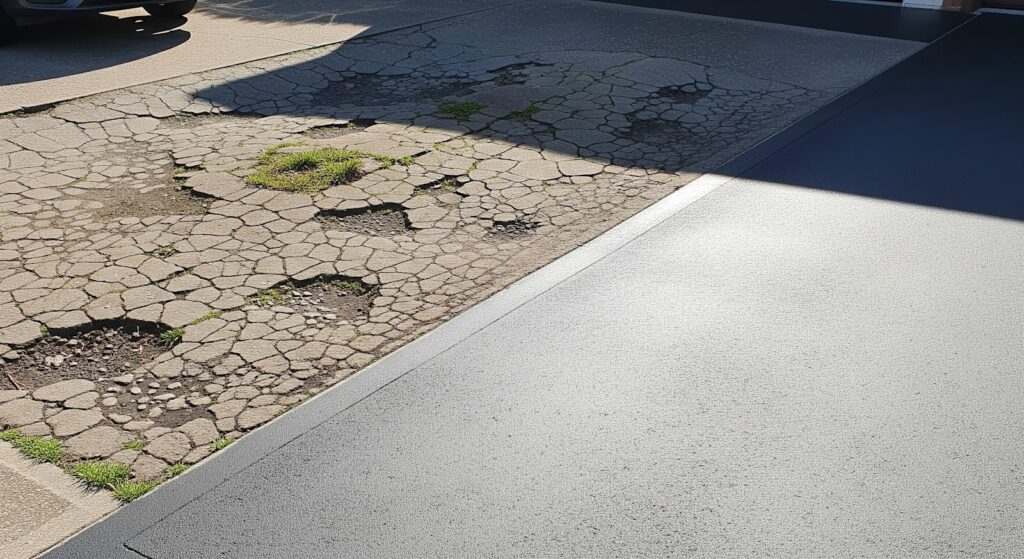
Advantages of Resurfacing Your Driveway
Resurfacing offers several benefits, making it an attractive option for many homeowners.
- Cost savings: Resurfacing is less expensive than replacement.
- Time efficiency: The process is quicker, minimizing disruption.
- Improved appearance: Enhances curb appeal with a fresh surface.
Potential Drawbacks of Driveway Resurfacing
While resurfacing has its advantages, there are also potential downsides to consider.
- Limited lifespan: Resurfacing may not last as long as a full replacement.
- Not suitable for severe damage: Cannot address structural issues.
- Frequent maintenance: May require more upkeep over time.
Benefits and Challenges of Driveway Replacement
Advantages of Full Driveway Replacement
Replacing your driveway can offer numerous benefits, especially for those with significant damage.
- Long-term solution: Addresses foundational problems for lasting results.
- Enhanced durability: New materials provide a robust surface.
- Increased property value: A new driveway can boost your home’s value.
Considerations Before Opting for Replacement
Before deciding on replacement, consider the following factors.
- Higher cost: Replacement is more expensive than resurfacing.
- Longer project duration: The process takes more time to complete.
- Disruption: May cause temporary inconvenience during installation.
Factors Influencing the Decision Between Resurfacing and Replacement
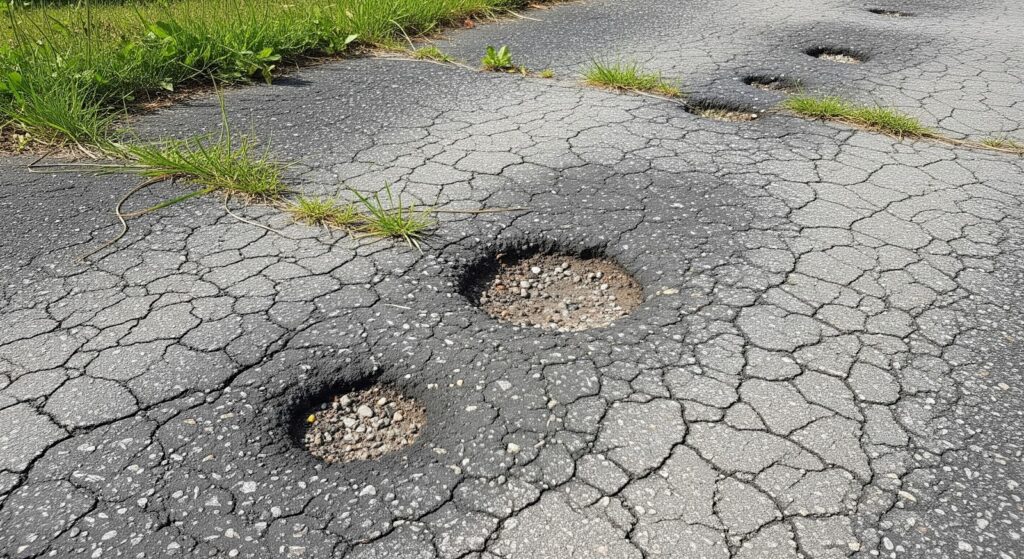
Age and Condition of Your Driveway
The age and current condition of your driveway play a significant role in deciding between resurfacing and replacement.
- Older driveways: May benefit more from replacement.
- Minor damage: Resurfacing can be a suitable option.
- Structural issues: Replacement is necessary for severe problems.
Soil Conditions and Local Climate
Environmental factors can impact the effectiveness of resurfacing or replacement.
- Unstable soil: May require replacement for stability.
- Harsh climates: Can affect the longevity of resurfacing.
- Drainage issues: Replacement can address underlying problems.
Budget Constraints and Long-Term Value
Your budget and the long-term value of your investment are crucial considerations.
- Limited budget: Resurfacing is a more affordable option.
- Long-term investment: Replacement offers better value over time.
- Cost-benefit analysis: Weigh the initial cost against potential savings.
Usage Patterns and Load Requirements
Consider how you use your driveway and the load it needs to support.
- Heavy vehicles: May require replacement for durability.
- Frequent use: Resurfacing can suffice for lighter loads.
- Future needs: Plan for potential changes in usage.
Signs It’s Time to Resurface or Replace Your Driveway
Indicators for Driveway Resurfacing
Certain signs suggest that resurfacing may be the right choice for your driveway.
- Minor cracks: Can be addressed with resurfacing.
- Surface wear: Resurfacing can restore appearance.
- No structural damage: Suitable for driveways in good condition.
When Full Replacement is Necessary
In some cases, replacement is the only viable option.
- Severe cracks: Indicate structural issues.
- Drainage problems: Replacement can resolve these.
- Age-related deterioration: Older driveways may need replacement.
Time and Disruption Factors
Duration of Resurfacing Projects
Resurfacing is typically quicker, minimizing disruption to your daily life.
- Shorter timeframe: Usually completed in a few days.
- Minimal disruption: Less impact on property access.
- Quick turnaround: Ideal for those needing fast results.
Timeframe for Complete Driveway Replacement
Replacement takes longer due to the extensive work involved.
- Longer duration: Can take several weeks to complete.
- Greater disruption: May affect daily routines.
- Planning required: Consider timing and scheduling.
Lifespan and Durability Expectations
Longevity of Resurfaced Driveways
Resurfacing can extend the life of your driveway, but not indefinitely.
- Shorter lifespan: Typically lasts 5-10 years.
- Maintenance required: Regular upkeep needed.
- Cost-effective: Good for short-term solutions.
Expected Lifespan of Newly Replaced Driveways
Replacement offers a more durable and long-lasting solution.
- Longer lifespan: Can last 20-30 years or more.
- Less maintenance: Requires less frequent repairs.
- Better investment: Higher initial cost but longer durability.
Final Thoughts
Deciding between resurfacing and replacement for your driveway depends on various factors, including the condition of your driveway, budget, and long-term goals. By understanding the pros and cons of each option, you can make an informed decision that best suits your needs. Whether you choose resurfacing or replacement, selecting the right contractor is essential for a successful project.
FAQs
Can you resurface a concrete driveway with asphalt?
Yes, you can resurface a concrete driveway with asphalt. This process involves applying a layer of asphalt over the existing concrete surface. It can improve the appearance and extend the life of your driveway.
How long does driveway resurfacing typically last?
Driveway resurfacing typically lasts between 5 to 10 years. The lifespan depends on factors such as the quality of materials used and the level of maintenance. Regular upkeep can help extend its durability.
Is it cheaper to resurface or replace a driveway?
Resurfacing is generally cheaper than replacing a driveway. It involves less labor and material costs, making it a cost-effective option for minor repairs. However, replacement may offer better long-term value for severely damaged driveways.