

Scroll through Instagram or Pinterest in 2026, and you will notice a trend in bathroom design: The Grout-Free Wet Room.
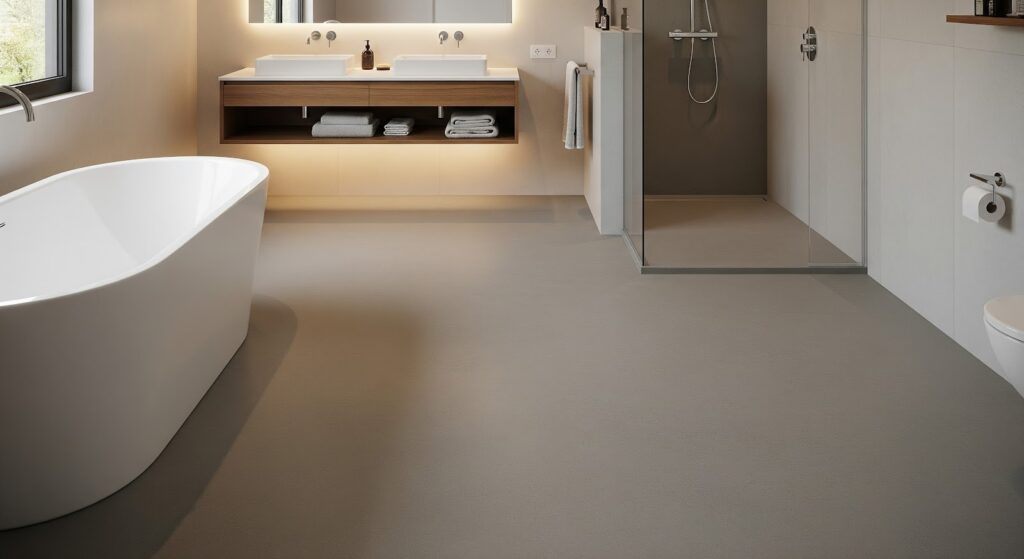
Gone are the subway tiles and the nightmare of scrubbing moldy grout lines. They have been replaced by smooth, earthy, continuous walls and floors that look like carved stone or soft concrete. This material is called Microcement.
For homeowners renovating a bathroom, microcement is tempting. It evokes the feeling of a luxury spa or a Mediterranean villa. But is it practical for a wet environment? Does it actually keep water out? In this technical review, we assess whether microcement is the dream solution or a risky endeavor.
What is Microcement?
Microcement is a composite coating based on cement, water-based resins, additives, and mineral pigments. Unlike thick concrete, it is applied by hand-trowel in extremely thin layers (total thickness 2mm – 3mm). Because of the added polymers, it is much more flexible than traditional cement, allowing it to bond to walls, floors, ceilings, and even specialized vanity units.
The Pros: Why Everyone Wants It
1. The Seamless Hygiene Factor
The single biggest advantage is the elimination of grout.
- Traditional tile grout is porous. It absorbs soap scum, water, and eventually turns pink (bacteria) or black (mold).
- Microcement is continuous. Water simply beads off the surface. Cleaning involves a simple wipe-down with a neutral cleaner. There are no “gaps” for mold to grow in.
2. The Aesthetic Continuity
Microcement allows you to blur the lines between floor and wall. You can continue the floor material right up the wall and into the shower tray, creating a minimalist, visual expansion of the space. It makes small bathrooms feel significantly larger.
3. Textural Warmth
Unlike cold glazed tiles, microcement has a “tactile” quality. It feels softer and warmer underfoot (and it is fully compatible with electric underfloor heating). The hand-troweled application creates a subtle, cloudy movement that feels organic, not manufactured.
The Waterproofing Myth
Here is the most critical technical detail you need to know:
Microcement itself is waterproof, but the SYSTEM must be watertight.
People assume that because it’s a coating, it acts as the waterproofing layer (Tanking). This is false.
Microcement is porous by nature. It relies on high-tech sealers (polyurethane) to repel water. If that sealer scratches, water can get in.
- The Proper Build-Up: Behind the microcement, you still need a Standard Waterproof Tanking System.
- You install moisture-resistant board.
- You tape the seams and apply liquid waterproofing membrane (just like you would for tile).
- You apply the microcement over the tanking.
- Warning: Never apply microcement directly to drywall or plywood in a shower zone without a full tanking system underneath. If you skip this, water will eventually swell the substrate, and the aesthetic layer will fail.
The Cons: Risks & Costs
1. Installation Time & Cost
Microcement is not a “weekend DIY” paint job. It involves:
- Mesh and base coats.
- Intermediate coats.
- Sanding between every coat.
- Multiple sealers.
It takes roughly 5 to 7 days for a professional to finish a small bathroom due to drying times. Consequently, it is more expensive than standard tiling (usually $15 – $25 per sq ft) because you are paying for skilled artisanship, not just materials.
2. Cracking Risks (Movement)
Bathrooms involve timber framing, heavy bathtubs full of water, and humidity swings. Houses move.
While flexible, microcement has limits. If your house settles significantly, microcement can hairline crack.
- Mitigation: High-quality installers use extensive fiberglass mesh layers to create a “skeleton” that resists cracking, but no cement product is immune to severe structural shifting.
3. Slippery When Wet?
A glossy, smooth resin floor in a shower sounds like a slip hazard.
- The Fix: Professionals add microscopic glass beads or aggregate particles into the final sealer coat for floor areas. This makes the surface “anti-slip” (R10 or R11 rating) without changing the look. Ensure your installer specifies an anti-slip sealer for the wet zones.
Conclusion: Is It Right for You?
Microcement is perfect for you if:
- You hate cleaning grout.
- You want a modern, wabi-sabi, or industrial aesthetic.
- You have the budget for a specialized artisan installer.
Microcement is NOT for you if:
- You want a “cheap and quick” fix (stick to large-format porcelain tile).
- Your subfloor is bouncy or structurally unstable.
When done correctly with proper tanking and sealing, a microcement bathroom is a high-performance wet room that adds massive value and style to your home. Just don’t skimp on the waterproofing underneath.