

Thinking about giving your dull concrete floor a fresh, modern look without hiring a pro? Staining it yourself can be a great DIY project, but before you start, you’re probably wondering how much it costs to stain concrete floors yourself.
The good news? It’s more affordable than most people think. The total cost depends on the stain type, surface condition, tools, and sealant you choose. In this article, we’ll break down everything you need to know from materials and prep work to estimated DIY costs, so you can plan your project confidently and achieve a beautiful, professional-looking concrete finish on your own.
Understanding the Basics of Concrete Staining
Types of Concrete Stains
Concrete stains come in two main types: acid-based and water-based. Acid-based stains react with the minerals in the concrete to create a unique, variegated look, while water-based stains offer a broader range of colors and a more uniform appearance. Each type has its own advantages and considerations, so it’s important to choose the right one for your project.
- Acid-Based Stains: Create a natural, marbled effect.
- Water-Based Stains: Provide a consistent color and are available in more shades.
- Considerations: Choose based on desired look and ease of application.
Benefits of Staining Concrete Floors
Staining concrete floors offers several benefits beyond just aesthetics. It enhances the durability of the floor, making it resistant to wear and tear. Additionally, stained concrete is easy to maintain and can improve the overall value of your home. The versatility of concrete staining allows for creative designs that can mimic the look of more expensive flooring options.
- Durability: Resistant to scratches and stains.
- Low Maintenance: Easy to clean and maintain.
- Aesthetic Appeal: Can mimic the look of stone, wood, or tile.
Cost Breakdown for DIY Concrete Staining
Materials and Supplies Needed
To stain concrete floors yourself, you’ll need a variety of materials and supplies. These include the stain itself, a sealer, cleaning supplies, and application tools. The cost of these materials can vary depending on the size of your project and the quality of the products you choose.
- Stain: $25-$248.95
- Sealer: $25.00 – $1,494.95
- Application Tools: Brushes, rollers, or sprayers.
Average Cost per Square Foot
The average cost to stain concrete floors yourself typically ranges from $0.50 to $2.00 per square foot. This cost includes the stain, sealer, and necessary tools. However, the final cost can vary based on the complexity of the design and the condition of the concrete.
| Item | Cost Range |
| Stain | $4.50 – $8.00/sq ft |
| Sealer | $0.40 – $1.00/sq ft |
| Tools and Supplies | $0.10 – $0.50/sq ft |
Cost of Sealer and Additional Materials
Sealing the stained concrete is an essential step to protect the finish and enhance its longevity. The cost of sealer can vary based on the type and quality. Additional materials such as cleaning agents and protective gear should also be factored into your budget.
- Sealer: Essential for protection and longevity.
- Cleaning Agents: Necessary for proper preparation.
- Protective Gear: Safety goggles, gloves, and masks.
Factors Influencing the Cost of Staining Concrete Floors
Type of Stain and Sealer
The type of stain and sealer you choose can significantly impact the overall cost of your project. Acid-based stains tend to be more expensive than water-based options, and high-quality sealers can also add to the cost. It’s important to balance cost with the desired outcome and durability.
- Acid-Based Stains: Higher cost but unique finish.
- Water-Based Stains: More affordable and versatile.
- Sealer Quality: Affects durability and appearance.
Floor Preparation and Cleaning
Proper preparation and cleaning of the concrete floor are crucial for a successful staining project. This step can involve additional costs for cleaning supplies and equipment rental if needed. The condition of the concrete will also affect the amount of preparation required.
- Cleaning Supplies: Essential for removing dirt and debris.
- Equipment Rental: May be needed for large or complex projects.
- Concrete Condition: Affects preparation time and cost.
Complexity of Design and Labor
The complexity of the design you choose can also influence the cost. Intricate patterns or multiple colors will require more time and materials, increasing the overall expense. Additionally, if you decide to hire help for certain aspects of the project, labor costs will need to be considered.
- Design Complexity: More intricate designs cost more.
- Multiple Colors: Increases material and labor costs.
- Labor Costs: Consider if hiring assistance.
Saving Money on Staining Concrete Floors
Can I Save Money by Staining My Concrete Myself
Staining your concrete floors yourself can be a cost-effective alternative to hiring professionals. By doing the work yourself, you can save on labor costs and have more control over the budget. However, it’s important to weigh the potential savings against the time and effort required.
- Labor Savings: Avoid professional fees.
- Budget Control: Choose materials within your budget.
- Time Investment: Consider the time commitment.
DIY vs. Hiring a Professional
While DIY staining can save money, hiring a professional may be worth the investment for complex projects or if you’re unsure of your skills. Professionals have the experience and tools to achieve a high-quality finish, which can be beneficial for large or intricate designs.
- Professional Expertise: Ensures a high-quality finish.
- Complex Projects: May require professional skills.
- Cost vs. Quality: Balance savings with desired outcome.
Tips for Cost-Effective Staining
To keep costs down, consider purchasing materials in bulk or during sales. Additionally, opting for simpler designs and using existing tools can help reduce expenses. Planning and budgeting carefully will also ensure you stay within your financial limits.
- Bulk Purchases: Save on materials.
- Simple Designs: Reduce complexity and cost.
- Use Existing Tools: Minimize additional expenses.
Is Stained Concrete Expensive
Stained concrete is generally more affordable than many other flooring options, especially when done as a DIY project. The cost-effectiveness of stained concrete makes it an attractive choice for budget-conscious homeowners looking to enhance their space.
Long-Term Value and Durability
Stained concrete offers excellent long-term value due to its durability and low maintenance requirements. Unlike other flooring options, it doesn’t require frequent replacement or extensive upkeep, making it a cost-effective choice over time.
- Durability: Withstands heavy use.
- Low Maintenance: Reduces long-term costs.
- Longevity: Lasts for many years.
Do Stained Concrete Floors Add Value to Your Home
Stained concrete floors can add value to your home by enhancing its aesthetic appeal and providing a durable, low-maintenance flooring option. The unique look of stained concrete can also make your home more attractive to potential buyers.
Impact on Property Value
The addition of stained concrete floors can positively impact your property’s value by offering a modern and stylish flooring option. This can be particularly appealing in areas like basements, garages, and outdoor spaces.
- Modern Appeal: Attracts potential buyers.
- Increased Value: Enhances property worth.
- Versatile Use: Suitable for various areas.
Aesthetic Appeal and Market Trends
Stained concrete is a popular choice in modern home design due to its versatility and aesthetic appeal. It can be customized to match current market trends, making it a desirable feature for homeowners and buyers alike.
- Customizable Designs: Match current trends.
- Versatile Aesthetic: Complements various styles.
- Desirable Feature: Increases marketability.
Additional Costs Involved in Staining Concrete
Cost for Cleaning and Preparing Concrete Floors
Proper cleaning and preparation of the concrete surface are essential for a successful staining project. This step may involve additional costs for cleaning agents, tools, and equipment rental if necessary. Ensuring the concrete is clean and free of debris will help achieve the best results.
Importance of Proper Cleaning
Thorough cleaning is crucial to remove any dirt, oil, or stains that could affect the stain’s adhesion. Investing in quality cleaning products and taking the time to prepare the surface properly will ensure a smooth and even finish.
- Quality Cleaning Products: Ensure effective preparation.
- Time Investment: Essential for best results.
- Surface Preparation: Affects stain adhesion.
Tools and Equipment Costs
Depending on the condition of your concrete, you may need to rent or purchase additional tools and equipment for cleaning and preparation. This can include pressure washers, scrubbers, or grinders, which can add to the overall cost of the project.
- Pressure Washers: For deep cleaning.
- Scrubbers: Remove stubborn stains.
- Grinders: Smooth uneven surfaces.
Cost to Grind Concrete Floor
Grinding the concrete floor may be necessary if the surface is uneven or has imperfections. This process can add to the overall cost of the project, but it is essential for achieving a smooth and even finish.
When Grinding is Necessary
Grinding is typically required for older concrete floors or those with significant imperfections. It helps create a smooth surface for the stain to adhere to, ensuring a professional-looking finish.
- Older Floors: May require grinding.
- Surface Imperfections: Need smoothing.
- Professional Finish: Achieved through grinding.
Associated Costs and Considerations
The cost of grinding can vary based on the size of the area and the condition of the concrete. Renting a grinder or hiring a professional can add to the overall expense, but it is often necessary for achieving the best results.
- Rental Costs: For grinders and equipment.
- Professional Services: May be needed for large areas.
- Budget Considerations: Factor into overall cost.
Advanced Concrete Decor Techniques
Intricate Designs and Patterns
For those looking to add a unique touch to their stained concrete floors, intricate designs and patterns can be incorporated. These advanced techniques can elevate the look of your floors but may also increase the cost due to the additional materials and labor required.
- Unique Designs: Enhance aesthetic appeal.
- Additional Materials: Required for complex patterns.
- Labor Intensive: Increases project cost.
Additional Costs for Customization
Customization options such as stenciling, scoring, or adding multiple colors can add to the overall cost of the project. These techniques require additional materials and time, but they can create a truly one-of-a-kind look.
- Stenciling: Adds visual interest.
- Scoring: Creates texture and depth.
- Multiple Colors: Increases material costs.
Longevity and Durability of Stained Concrete
Does Stained Concrete Last
Stained concrete is known for its longevity and durability, making it a popular choice for high-traffic areas. With proper maintenance, stained concrete floors can last for many years, providing a cost-effective and attractive flooring solution.
Longevity and Maintenance
The longevity of stained concrete is one of its key benefits. Regular maintenance, such as cleaning and resealing, will help preserve the finish and extend the life of the floors.
- Regular Cleaning: Maintains appearance.
- Resealing: Protects the finish.
- Long-Lasting: Withstands heavy use.
Factors Affecting Durability
Several factors can affect the durability of stained concrete, including the quality of the stain and sealer, the level of foot traffic, and the maintenance routine. Choosing high-quality products and following a regular maintenance schedule will ensure the floors remain in excellent condition.
- Product Quality: Affects longevity.
- Foot Traffic: Influences wear and tear.
- Maintenance Routine: Essential for durability.
Is Stained Concrete Slippery
Safety Considerations
One common concern with stained concrete is its potential slipperiness, especially when wet. However, there are several solutions to enhance slip resistance and ensure the safety of your floors.
- Slip Resistance: Important for safety.
- Wet Conditions: Increase slipperiness.
- Safety Solutions: Available for added grip.
Solutions for Slip Resistance
To address slip resistance, consider adding a non-slip additive to the sealer or using a textured finish. These solutions can help prevent accidents and make the floors safer for everyday use.
- Non-Slip Additives: Enhance grip.
- Textured Finishes: Reduce slipperiness.
- Safety Measures: Improve floor safety.
Can You Stain Old Concrete
Staining old concrete is possible, but it may present some challenges. Older concrete surfaces may have stains, cracks, or other imperfections that need to be addressed before staining. Proper preparation is key to achieving a successful finish.
Challenges and Solutions
Older concrete may require additional cleaning and preparation to remove existing stains or repair cracks. Using high-quality products and following the proper steps will help ensure a successful staining project.
- Existing Stains: Need removal.
- Cracks and Imperfections: Require repair.
- Quality Products: Ensure success.
Preparation for Older Surfaces
Preparing older concrete surfaces involves thorough cleaning, repairing any damage, and possibly grinding the surface to ensure a smooth finish. Taking the time to prepare the surface properly will result in a more even and attractive stain.
- Thorough Cleaning: Essential for adhesion.
- Damage Repair: Necessary for smooth finish.
- Surface Grinding: May be required.
How to Stain Concrete Floors Yourself
Step-by-Step Guide to Staining Concrete
Staining concrete floors yourself can be a rewarding project with the right preparation and materials. Follow these steps to achieve a professional-looking finish.
Cleaning the Concrete
Start by thoroughly cleaning the concrete surface to remove any dirt, oil, or stains. This step is crucial for ensuring the stain adheres properly and results in an even finish.
- Remove Dirt and Debris: Essential for adhesion.
- Use Quality Cleaners: Ensure effective cleaning.
- Allow to Dry: Before applying stain.
Applying the Stain
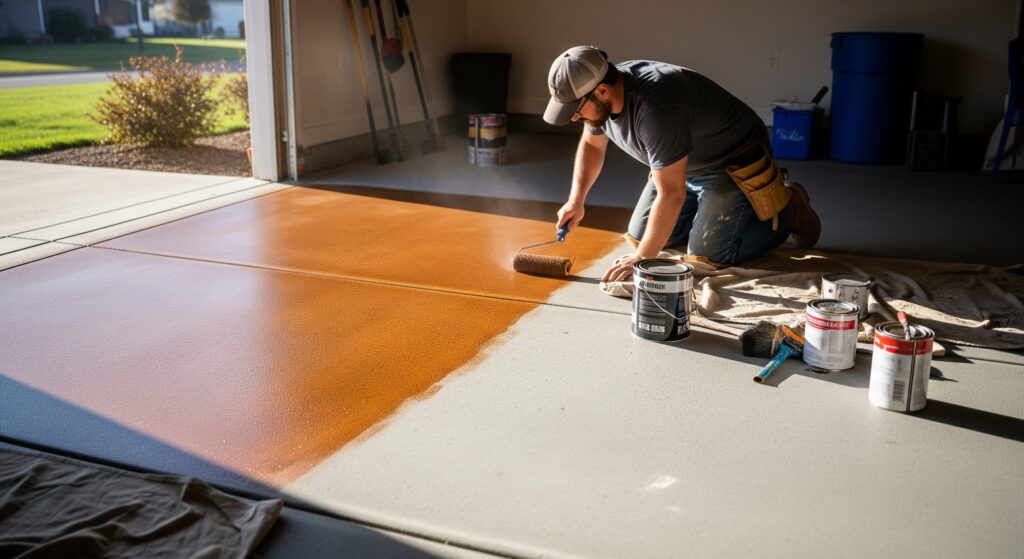
Once the surface is clean and dry, apply the stain using a brush, roller, or sprayer. Follow the manufacturer’s instructions for the best results, and consider applying multiple coats for a deeper color.
- Use Proper Tools: For even application.
- Follow Instructions: For best results.
- Multiple Coats: Achieve desired color.
Sealing the Stained Concrete Floors
After the stain has dried, apply a sealer to protect the finish and enhance its durability. Choose a sealer that is compatible with the type of stain used and follow the application instructions carefully.
- Choose Compatible Sealer: For protection.
- Apply Evenly: To avoid streaks.
- Allow to Cure: Before use.
Supplies Needed for DIY Concrete Staining
To successfully stain concrete floors yourself, you’ll need a variety of supplies. These include the stain, sealer, cleaning agents, and application tools. Purchasing quality products will ensure the best results.
Essential Tools and Materials
Having the right tools and materials is essential for a successful DIY staining project. Make sure to gather all necessary supplies before starting the project to avoid delays.
- Stain and Sealer: Key components.
- Cleaning Agents: For preparation.
- Application Tools: Brushes, rollers, sprayers.
Where to Purchase Supplies
Supplies for concrete staining can be purchased at home improvement stores, specialty flooring retailers, or online. Compare prices and read reviews to find the best products for your project.
- Home Improvement Stores: Wide selection.
- Specialty Retailers: Expert advice.
- Online Shopping: Convenient and often cheaper.
Precautions and Safety Tips
When staining concrete floors yourself, it’s important to take precautions to ensure your safety. Handling acid stains and other chemicals requires proper protective gear and measures.
Handling Acid Stains
Acid stains can be hazardous if not handled properly. Always wear protective gear, such as gloves and goggles, and work in a well-ventilated area to avoid inhaling fumes.
- Wear Protective Gear: Gloves, goggles, masks.
- Ventilation: Work in open areas.
- Follow Safety Instructions: For handling chemicals.
Protective Gear and Measures
In addition to handling chemicals safely, take measures to protect yourself and your surroundings. Cover nearby surfaces to prevent accidental staining and clean up spills immediately.
- Cover Surroundings: Prevent accidental stains.
- Immediate Cleanup: For spills and drips.
- Safety First: Prioritize personal protection.
Conclusion
Staining concrete floors yourself can cost $50 – $9.50/sq ft, depending on the stain type, prep work, and sealer you use. For a typical 400–600 sq ft project, expect to spend $200 to $1,200 total on DIY materials, which is considerably lower than professional rates. With proper prep and sealing, stained concrete floors are durable, stylish, and long-lasting. If your floor requires grinding, moisture repair, or multilayer coloring, hiring a professional may deliver better results and protect your investment.
Frequently Asked Questions
How much does DIY concrete staining cost per square foot?
The cost of DIY concrete staining typically ranges from $0.50 to $2.00 per square foot. This includes the cost of stain, sealer, and necessary tools. The final cost can vary based on the complexity of the design and the condition of the concrete.
Can I stain concrete myself without professional help?
Yes, you can stain concrete yourself without professional help. With the right materials and preparation, DIY concrete staining can be a cost-effective way to enhance your floors. However, for complex designs or large areas, professional assistance may be beneficial.
How long does stained concrete last in a home?
Stained concrete can last for many years in a home with proper maintenance. Regular cleaning and resealing will help preserve the finish and extend the life of the floors. The durability of stained concrete makes it a long-lasting flooring option.
Is stained concrete slippery and how can I prevent it?
Stained concrete can be slippery, especially when wet. To prevent slipperiness, consider adding a non-slip additive to the sealer or using a textured finish. These solutions can enhance slip resistance and improve safety.
Can I stain older concrete floors successfully?
Yes, you can stain older concrete floors successfully with proper preparation. Older surfaces may require additional cleaning and repair to ensure a smooth finish. Using high-quality products and following the correct steps will help achieve the best results.