

Concrete-style floors are no longer limited to ground-level slabs or industrial buildings. Homeowners, designers, and contractors increasingly want the clean, modern look of concrete in upper floors, wood-framed homes, and renovation projects. This has raised a critical and often misunderstood question.
Can concrete flooring actually be installed over a plywood subfloor?
The answer is yes, but only when the right systems and methods are used. Installing concrete over plywood is not a simple pour-and-walk-away job. It requires a deep understanding of structural movement, material compatibility, and modern concrete technologies designed specifically for non-concrete substrates.
This guide explains what is truly possible, what is not, and how professionals achieve durable concrete-style floors over plywood without cracking or failure.
Can Concrete Flooring Be Installed Over Plywood Subfloors
Yes, concrete-style flooring can be installed over plywood subfloors, but traditional poured concrete cannot be applied directly onto plywood. Doing so will almost always lead to cracking, separation, and long-term failure.
What is possible is the use of specialized cement-based systems such as microcement, polymer-modified overlays, or wood-rated self-leveling compounds. These systems are engineered to work with the natural movement of plywood rather than against it.
The success of concrete flooring over plywood depends on three critical factors:
- The type of concrete system used
- The structural condition of the plywood subfloor
- Proper preparation and reinforcement
When these factors are addressed correctly, concrete-style floors over plywood can perform reliably and look exceptional.
Why Traditional Concrete Fails Over Plywood
Plywood and concrete behave very differently. Understanding this difference is essential.
Plywood is flexible by design. It expands and contracts with humidity, temperature changes, and load movement. Concrete is rigid and brittle. When rigid materials are bonded to flexible substrates without accommodation for movement, cracking is inevitable.
Traditional poured concrete fails over plywood because:
- Plywood flexes under foot traffic
- Seasonal humidity causes expansion and contraction
- Upper floors experience vibration and deflection
- Concrete cannot tolerate substrate movement
Even hairline movement in plywood is enough to fracture rigid concrete layers. This is why direct concrete pours over wood subfloors are never recommended by professionals.
What “Concrete Flooring” Actually Means in This Context
Most people asking about concrete over plywood are not referring to structural concrete. They are referring to concrete appearance flooring systems.
These include:
- Microcement floors
- Polymer-modified cement overlays
- Decorative concrete coatings
- Thin self-leveling cement systems
These materials are fundamentally different from standard concrete. They are designed to bond strongly, remain thin, and tolerate limited movement without cracking.
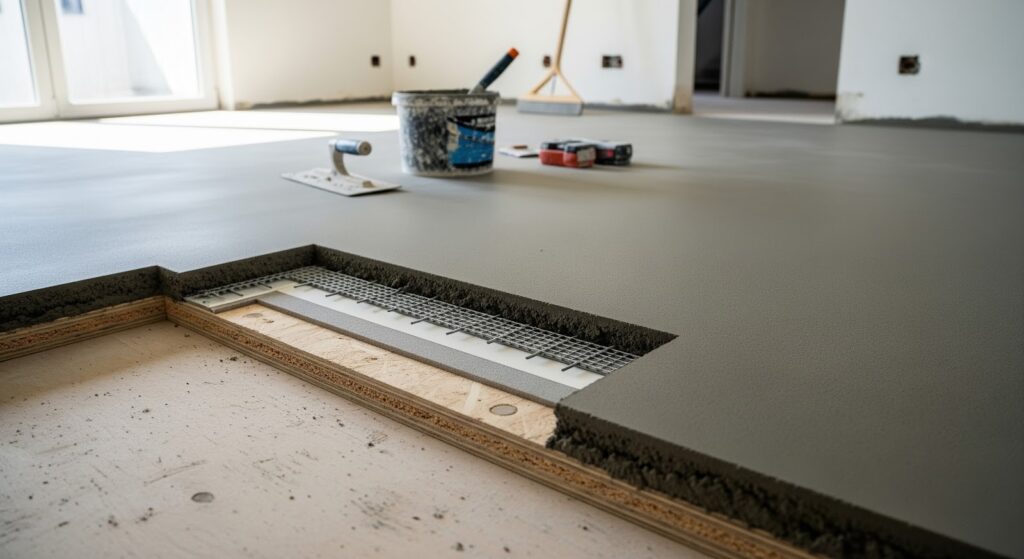
Microcement Floors Over Plywood Subfloors
Microcement is the most reliable and widely used solution for achieving a concrete look over plywood.
Microcement is a polymer-enhanced cement coating applied in very thin layers. Because it is flexible and lightweight, it can move slightly with the plywood beneath it without failing.
Why Microcement Works on Plywood
- Thin application reduces stress
- Polymer content increases flexibility
- High-performance primers ensure adhesion
- Lightweight system avoids structural overload
- Seamless finish eliminates weak joints
Microcement is commonly used in residential upper floors, lofts, renovations, and wood-framed buildings where traditional concrete is impossible.
Using Self-Leveling Cement Over Plywood
Self-leveling cement can be used over plywood, but only when the product is specifically rated for wood subfloors and installed with strict preparation standards.
This method is not universally suitable and requires professional judgment.
Conditions Where It Can Work
- Plywood meets deflection requirements
- Subfloor thickness is adequate
- Reinforcement mesh is installed
- Flexible primer is applied
- Thickness limits are respected
Without these conditions, self-leveling cement will crack or debond over time.
Why Subfloor Condition Is More Important Than the Material
Even the best concrete overlay system will fail if the plywood subfloor is unstable.
Before any concrete-style flooring is installed, the subfloor must be evaluated thoroughly.
Minimum Subfloor Requirements
- Structurally sound plywood
- No excessive deflection
- Secure fastening to joists
- No water damage or delamination
- Flat and level surface
- Proper moisture levels
If the subfloor moves too much, no surface coating can compensate for that movement.
The Role of Reinforcement Layers
Reinforcement is essential when installing concrete-style floors over plywood.
Common reinforcement methods include:
- Fiberglass mesh
- Reinforcing fabric
- Metal lath in select systems
- Proprietary membrane systems
Reinforcement spreads stress across the surface and minimizes localized cracking. It also improves long-term durability by absorbing minor movement from the plywood below.
Skipping reinforcement is one of the most common reasons concrete overlays fail on wood subfloors.
Moisture and Vapor Considerations
Plywood is highly sensitive to moisture. Concrete-based products also rely on controlled curing conditions.
Moisture problems can cause:
- Adhesion failure
- Swelling of plywood
- Cracking of cement layers
- Discoloration of finishes
Moisture testing and vapor management are essential before installation. In some cases, a moisture barrier or isolation membrane may be required.
Weight Considerations for Upper Floors
One major advantage of microcement and thin overlays is weight reduction.
Traditional concrete is extremely heavy and often exceeds the load capacity of wood-framed floors. Thin concrete systems avoid this issue.
Lightweight systems:
- Reduce structural risk
- Avoid reinforcement of framing
- Meet building load requirements
- Are suitable for apartments and upper floors
This makes them ideal for residential renovations and multi-story buildings.
Where Concrete-Style Floors Over Plywood Are Commonly Used
Concrete-look flooring over plywood is commonly used in:
- Bedrooms
- Living rooms
- Lofts
- Hallways
- Home offices
- Retail spaces
- Light commercial interiors
They are less suitable for areas with extreme moisture exposure unless additional waterproofing is applied.
Common Mistakes That Lead to Failure
Most failures are caused by poor planning, not poor materials.
Critical Mistakes to Avoid
- Pouring traditional concrete directly on plywood
- Ignoring deflection limits
- Skipping reinforcement
- Using incorrect primers
- Applying excessive thickness
- Installing over damaged plywood
Concrete-style flooring over plywood is a system, not a single product. Every layer matters.
Maintenance and Longevity
When installed correctly, concrete-style floors over plywood can last many years.
Maintenance typically involves:
- Gentle cleaning
- Avoiding harsh chemicals
- Periodic resealing if required
Microcement and overlays do not require intensive upkeep and are well suited to modern living environments.
Is Concrete Flooring Over Plywood a Good Idea
It can be an excellent solution when done correctly.
Concrete-style flooring over plywood offers:
- Modern aesthetic
- Seamless appearance
- Lightweight installation
- Compatibility with renovations
- Flexibility for upper floors
However, it is not a DIY-friendly project and should be handled by professionals experienced with wood substrates.
Conclusion
Concrete flooring over plywood subfloors is possible, but not through traditional concrete pouring. Success depends on using the right concrete-style systems, ensuring the plywood structure is stable, and following precise preparation and reinforcement methods.
Microcement and polymer-modified overlays have made it possible to achieve durable, crack-resistant concrete finishes over wood subfloors in homes and commercial spaces. When planned and installed properly, these systems deliver the concrete look without the risks associated with rigid materials on flexible structures.
If the goal is durability, aesthetics, and long-term performance, the system matters far more than the label “concrete.”
FAQs
Can you pour real concrete over plywood
No. Traditional concrete will crack and fail due to plywood movement.
What is the best concrete option over plywood
Microcement and polymer-modified concrete overlays are the most reliable options.
Will concrete crack over plywood
Yes, unless flexible systems and reinforcement are used.
Is concrete flooring over plywood safe for upper floors
Yes, when lightweight systems are used and structural limits are respected.
Does plywood need reinforcement before concrete-style flooring
Yes. Reinforcement layers are essential to control movement and stress.