
Planning a new floor or resurfacing project and wondering whether to go with self-leveling concrete or the traditional mix? It’s a common question for homeowners across the Bay Area. Both options have their strengths, self-leveling concrete is quick, smooth, and perfect for coatings, while traditional concrete is tough, versatile, and built to last.
But which one do Bay Area contractors actually recommend? The answer often depends on your project goals, budget, and timeline. In this article, we’ll break down self-leveling vs traditional concrete, their pros and cons, and which option makes the most sense for local homes and weather conditions.
Self-Leveling Concrete vs Traditional Concrete: What Bay Area Contractors Recommend
Concrete is a fundamental material in construction, and choosing the right type can significantly impact the outcome of a project. In the Bay Area, contractors often weigh the benefits of self-leveling concrete against traditional concrete methods. Understanding the differences between these two options is crucial for making informed decisions.
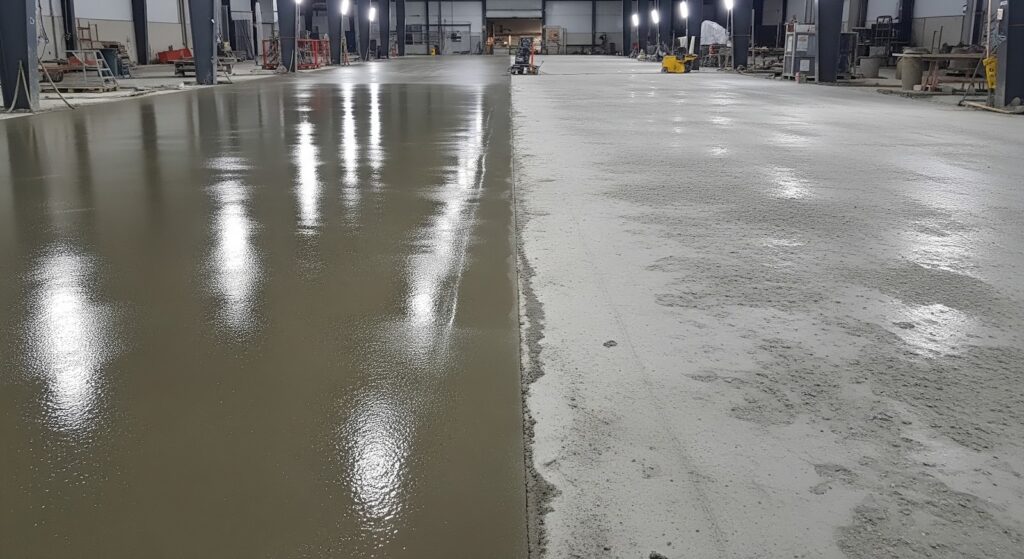
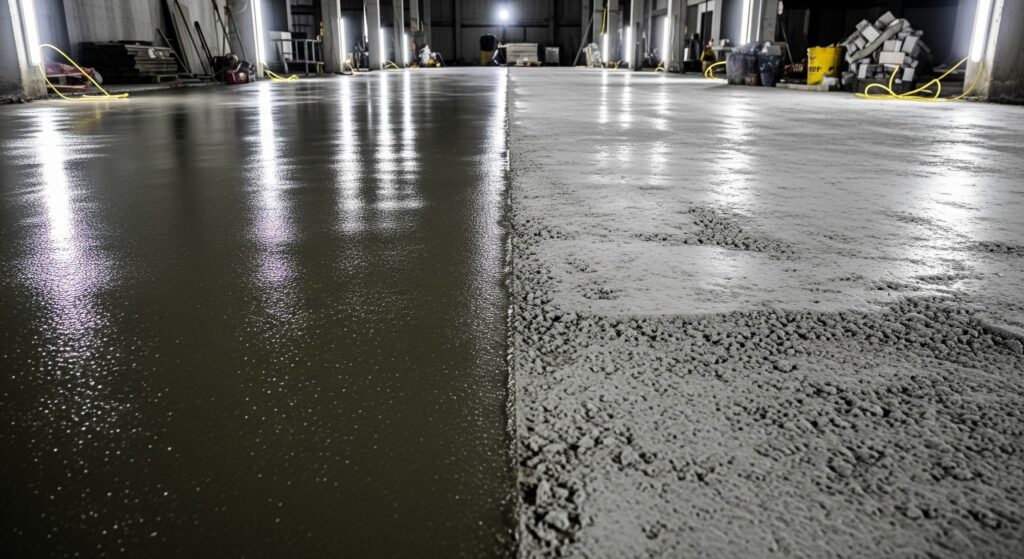
Self-leveling concrete is a polymer-modified cement that flows easily and sets quickly, creating a smooth surface without the need for extensive finishing. Traditional concrete, on the other hand, requires more manual labor to spread and finish, often resulting in a rougher surface.
- Self-Leveling Concrete: Flows easily, quick setting, smooth finish.
- Traditional Concrete: Requires manual spreading, longer setting time, rougher finish.
Pros and Cons of Each Method
Each method has its advantages and disadvantages. Self-leveling concrete is known for its ease of use and quick application, but it can be more expensive. Traditional concrete is cost-effective but requires more labor and time.
- Pros of Self-Leveling Concrete: Quick application, smooth finish, less labor-intensive.
- Cons of Self-Leveling Concrete: Higher cost, not suitable for all applications.
- Pros of Traditional Concrete: Cost-effective, versatile.
- Cons of Traditional Concrete: Labor-intensive, longer setting time.
Benefits of Self-Leveling Concrete in Bay Area Construction
Self-leveling concrete offers several benefits that make it an attractive option for many Bay Area construction projects.
Faster Installation Process
One of the primary advantages of self-leveling concrete is its rapid installation process. It can be poured and spread quickly, reducing the overall project timeline.
- Quick Pouring: Reduces project time.
- Less Labor: Fewer workers needed for installation.
Improved Surface Smoothness
Self-leveling concrete naturally creates a smooth, even surface, which is ideal for projects requiring a high-quality finish.
- Smooth Finish: Ideal for aesthetic projects.
- Even Surface: Reduces need for additional finishing.
Enhanced Durability
The polymer-modified composition of self-leveling concrete enhances its durability, making it suitable for high-traffic areas.
- Durable Composition: Withstands heavy use.
- Long-Lasting: Reduces the need for repairs.
When to Choose Traditional Concrete Methods?
While self-leveling concrete has its advantages, there are situations where traditional concrete is the better choice.
Outdoor Applications
Traditional concrete is often preferred for outdoor applications due to its versatility and ability to withstand environmental conditions.
- Weather Resistance: Suitable for outdoor use.
- Versatile Applications: Can be used in various outdoor settings.
Heavy-Duty Industrial Flooring
For heavy-duty industrial flooring, traditional concrete provides the strength and durability needed to support heavy machinery and equipment.
- High Strength: Supports heavy loads.
- Durable: Ideal for industrial settings.
Budget Constraints
For projects with tight budgets, traditional concrete is often the more economical choice.
- Cost-Effective: Lower material costs.
- Budget-Friendly: Suitable for cost-conscious projects.
Self-Leveling Concrete Applications in Commercial Spaces
Self-leveling concrete is particularly beneficial in commercial spaces where aesthetics and durability are important.
Retail Stores
In retail environments, self-leveling concrete provides a smooth, attractive surface that enhances the shopping experience.
- Aesthetic Appeal: Enhances store appearance.
- Durable Surface: Withstands foot traffic.
Office Buildings
Office buildings benefit from the smooth, professional finish of self-leveling concrete, which complements modern design aesthetics.
- Professional Finish: Complements office design.
- Low Maintenance: Easy to clean and maintain.
Healthcare Facilities
In healthcare settings, self-leveling concrete offers a hygienic, easy-to-clean surface that meets strict cleanliness standards.
- Hygienic Surface: Easy to sanitize.
- Smooth Finish: Reduces tripping hazards.
Maintenance and Longevity Comparison
The maintenance and longevity of concrete surfaces are crucial factors in determining the best option for a project.
Cleaning and Care
Self-leveling concrete requires minimal maintenance, while traditional concrete may need more frequent cleaning and care.
- Low Maintenance: Easy to clean.
- Durable Surface: Resists stains and damage.
Repair and Restoration
Both types of concrete can be repaired, but self-leveling concrete often requires less frequent restoration.
- Less Frequent Repairs: Durable and long-lasting.
- Easy Restoration: Simple repair process.
Lifespan Expectations
The lifespan of concrete surfaces varies, with self-leveling concrete often lasting longer due to its enhanced durability.
- Long Lifespan: Durable and resilient.
- Cost-Effective: Reduces long-term costs.
Final Thoughts
Choosing between self-leveling and traditional concrete depends on various factors, including project requirements, budget, and environmental considerations. By understanding the differences and benefits of each method, you can make an informed decision that aligns with your construction goals.
FAQs
How long does self-leveling concrete take to cure compared to traditional concrete?
Self-leveling concrete typically cures faster than traditional concrete. It can be set within a few hours, allowing for quicker project completion. In contrast, traditional concrete may take several days to cure fully, extending the project timeline.
Can self-leveling concrete be used outdoors?
Self-leveling concrete is generally not recommended for outdoor use. It is best suited for indoor applications where a smooth, level surface is required. Traditional concrete is more suitable for outdoor environments due to its durability and weather resistance.
Is self-leveling concrete stronger than traditional concrete?
Self-leveling concrete is not necessarily stronger than traditional concrete, but it offers enhanced durability and a smoother finish. Its polymer-modified composition provides a resilient surface, making it ideal for high-traffic areas. Traditional concrete, however, is often preferred for heavy-duty applications due to its strength.