

When it comes to commercial kitchens, the flooring choice is not merely about aesthetics. It must withstand heavy foot traffic, resist spills, and endure the rigorous demands of a bustling kitchen. At Duraamen Bay Area, we understand the unique needs of businesses in the San Francisco Bay Area.
Our mission since our founding in 2009 has been to provide high-performance, durable, and aesthetically pleasing flooring systems. In this guide, we’ll explore the best flooring options for commercial kitchens, considering factors like durability, maintenance, and style. Whether you’re a business owner or a contractor, this article will help you make an informed decision.
Epoxy Flooring for Commercial Kitchens
Epoxy flooring is one of the most widely used solutions in commercial kitchens because it delivers a seamless, non-porous surface that supports hygiene, safety, and durability. It is created by applying multiple layers of epoxy resin over prepared concrete, forming a hard, chemically resistant finish.
Why kitchens choose epoxy:
- Seamless surface prevents grease, water, and bacteria from penetrating the floor
- Strong resistance to oils, fats, food acids, and cleaning chemicals
- Can be finished with slip-resistant aggregates to improve safety in wet zones
- Easy to clean and compatible with frequent washdowns
- Customisable thickness, texture, and colour zoning for prep areas, cooking lines, and walkways
Limitations to consider:
- Standard epoxy has limited heat and thermal shock resistance
- Prolonged exposure to boiling water, steam, or hot oil spills can cause cracking
- Requires professional surface preparation for long-term performance
Best use cases:
Dry to moderately wet kitchens, prep areas, bakeries, cafés, ghost kitchens, and food production areas without extreme heat exposure.
Urethane Cement Flooring (Polyurethane Concrete)
Urethane cement flooring is considered the gold standard for high-performance commercial kitchens. It combines polyurethane resin with cement and aggregates to create a flooring system that chemically bonds to concrete and withstands extreme conditions.
Why it outperforms other options:
- Exceptional resistance to thermal shock, steam, and boiling water
- Withstands heavy equipment, rolling loads, and constant foot traffic
- Highly resistant to organic acids, fats, sugars, and harsh cleaners
- Naturally slip-resistant even when wet
- Does not soften or delaminate under high temperatures
Operational advantages:
- Ideal for kitchens with pressure washing and hot-water cleaning
- Maintains integrity in walk-in freezers and hot cooking zones
- Long service life with minimal maintenance
Cost perspective:
Higher upfront cost than epoxy, but lowest total cost of ownership due to longevity and reduced downtime.
Best use cases:
High-volume restaurants, hotel kitchens, commissaries, industrial kitchens, food factories, breweries, and facilities with extreme temperature fluctuations.
Polished Concrete Flooring
Polished concrete is created by mechanically grinding and polishing the concrete surface, often with densifiers to increase hardness. It offers a modern, minimalist appearance but has functional limitations in commercial kitchens.
Strengths:
- Durable base material with no coating to peel
- Easy to clean in dry environments
- Long lifespan when properly maintained
- Cost-effective over time
Critical limitations in kitchens:
- Naturally slippery when wet or greasy
- Limited resistance to acids, oils, and food spills unless sealed
- Sealer wear can expose concrete to staining and deterioration
- Not ideal for frequent washdowns
Best use cases:
Front-of-house areas, dry prep zones, cafés, or commercial kitchens with limited moisture and grease exposure.
Vinyl Flooring for Commercial Kitchens
Commercial-grade vinyl flooring (sheet vinyl or luxury vinyl tile) is often chosen for budget-conscious kitchens due to its fast installation and lower upfront cost.
Advantages:
- Water-resistant and easy to clean
- Comfortable underfoot for staff standing long hours
- Faster installation compared to resin systems
- Lower initial cost
Major drawbacks:
- Seams can allow water and bacteria penetration over time
- Susceptible to tearing, denting, and heat damage
- Limited lifespan in high-traffic kitchens
- Not suitable for heavy equipment or aggressive cleaning
Best use cases:
Small kitchens, temporary setups, food trucks, or low-impact environments with strict budget constraints.
Ceramic and Quarry Tile Flooring
Tile flooring has been a traditional choice in commercial kitchens, especially quarry tiles. While durable, tiles come with hygiene and maintenance challenges.
Advantages:
- High resistance to heat and fire
- Strong load-bearing capacity
- Familiar material for inspectors
Key challenges:
- Grout lines trap grease, moisture, and bacteria
- Grout deterioration leads to hygiene and compliance issues
- Slippery when wet unless heavily textured
- Higher maintenance and repair costs over time
Best use cases:
Legacy kitchens, areas with low moisture movement, or facilities prepared for intensive grout maintenance.
Hardwood Flooring in Commercial Kitchens (Why It’s Rarely Recommended)
Hardwood flooring is almost never recommended for commercial kitchens due to hygiene, safety, and durability concerns.
Why it fails in kitchens:
- Absorbs moisture, grease, and bacteria
- Warps and degrades under heat and humidity
- Extremely slippery when wet
- Difficult to sanitise to commercial food safety standards
Where it may appear:
Decorative or themed restaurants where aesthetics override practicality—but even then, it’s usually limited to non-food prep areas.
How to Choose Kitchen Flooring Material
Choosing the right flooring for a commercial kitchen is a performance decision, not a design one. The floor must support hygiene, safety, and daily operations under constant stress. The best choice depends on how your kitchen actually functions, not just how it looks on day one.
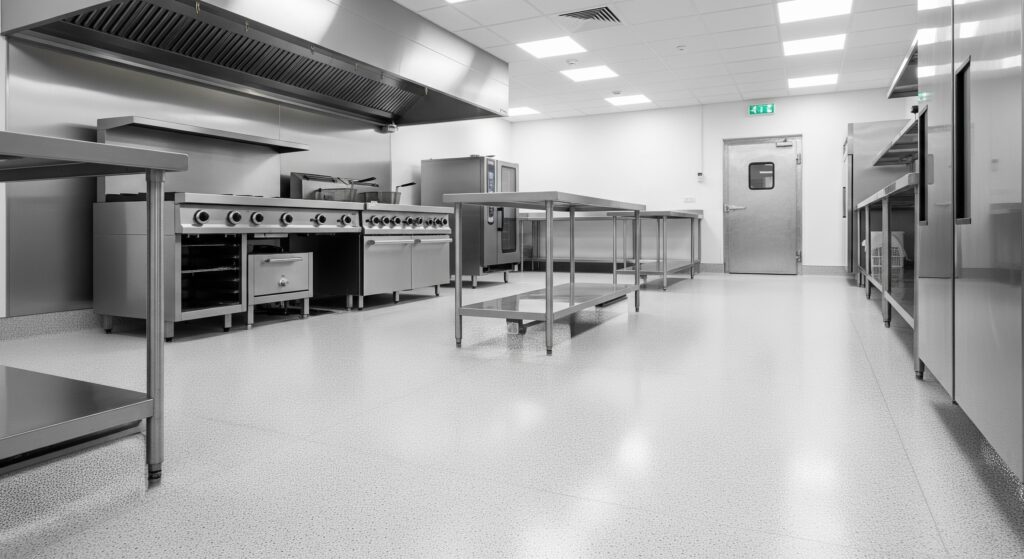
Here are the key factors to evaluate before selecting a kitchen flooring material:
1. Hygiene and Food Safety Compliance
Your flooring must support strict food safety standards. Seamless, non-porous surfaces are easier to sanitise and prevent bacteria, grease, and moisture from penetrating the floor. Avoid materials with open joints or grout lines unless you are prepared for intensive maintenance.
Best performers: Urethane cement, epoxy
Higher risk: Tile (grout), wood, poorly sealed concrete
2. Slip Resistance and Staff Safety
Commercial kitchens are wet, greasy, and fast-paced. Flooring should maintain traction even when wet to reduce slips and injuries. Textured finishes and slip-resistant aggregates are essential, especially near sinks, cook lines, and dishwashing areas.
Look for:
- Wet slip resistance ratings
- Textured or broadcast finishes
- Zoned traction levels for different work areas
3. Heat, Moisture, and Thermal Shock Resistance
Hot oil spills, steam, boiling water, and cold washdowns can damage many floor types. Materials must tolerate rapid temperature changes without cracking, delaminating, or softening.
Best performers: Urethane cement
Limited tolerance: Standard epoxy, vinyl
4. Durability Under Heavy Use
Kitchen floors endure constant foot traffic, rolling carts, dropped tools, and heavy equipment. Choose a system with proven resistance to impact, abrasion, and compressive loads.
Ask:
- Can it handle point loads from equipment?
- Will it resist wear from constant movement?
5. Cleaning Methods and Maintenance
Consider how your kitchen is cleaned. Pressure washing, harsh detergents, and frequent sanitation cycles demand flooring that can withstand aggressive cleaning without degradation.
Low-maintenance options: Seamless resin systems
Higher maintenance: Tile (grout care), vinyl (seam failure)
6. Drainage and Floor Sloping
Commercial kitchens require proper drainage. Flooring systems should integrate smoothly with drains and allow for sloping without cracking or pooling.
Important considerations:
- Compatibility with trench and point drains
- Ability to maintain slope integrity over time
7. Lifecycle Cost, Not Just Installation Cost
The cheapest floor upfront is often the most expensive long-term. Repairs, downtime, hygiene failures, and premature replacement quickly increase total cost.
Think in terms of:
- Lifespan
- Maintenance frequency
- Downtime risk
Final Thoughts
Durability and water resistance are top priorities for commercial kitchen flooring. Tile and concrete offer excellent durability, while vinyl provides a budget-friendly, low-maintenance option. Professional installation is recommended to ensure longevity and quality.
FAQs
Q: What is the most durable flooring for commercial kitchens?
A: Concrete and tile are the most durable options, ideal for high-traffic areas.
Q: Can I install hardwood in a commercial kitchen?
A: While possible, hardwood requires regular maintenance and is not ideal for areas with high moisture.
Q: How do I maintain my kitchen flooring?
A: Regular cleaning and sealing (for certain materials) will help maintain your flooring. Each material has specific maintenance needs.